Some Theatrical Variety
A peek Inside No. 9 and its use of stage traditions

We enjoyed the TV series Inside No. 9 in our house, so we went along to see the stage version, Inside No. 9: Stage/Fright. I’d missed it in the West End, but there’s now a tour of large provincial venues, and we caught the show at the New Theatre, Oxford. It wasn’t quite what I’d expected: a mix of comedy sketch show, Grand Guignol, actual play, and variety entertainment. It’s the kind of TV-to-stage adaptation we don’t often see these days, though such things were popular in the 1970s and 80s.
The surprise was largely my own fault for not reading much about it beforehand. I knew that the play featured new material with a Grand Guignol bent, but I had assumed it would be an entirely new piece – a long, stage-length episode of the series. In fact, the first half consists of skits, a stage recreation of the Bernie Clifton’s Dressing Room TV episode, and an interpolated sketch about bungling kidnappers featuring a different “celebrity” each night (more of which later).
Only in the second half do we find the substantial new piece, a Grand Guignol horror pastiche, La Terreur de l’Asile (Terror in the Asylum). This is an ingenious, multi-layered work of metatheatre on top of metatheatre, revealing itself as a set of Russian dolls – plays within plays within shows. The evening ends with a song-and-dance version of Cheese & Crackers’ theme song, If You’re Going to Cry, Cry Tears of Laughter.
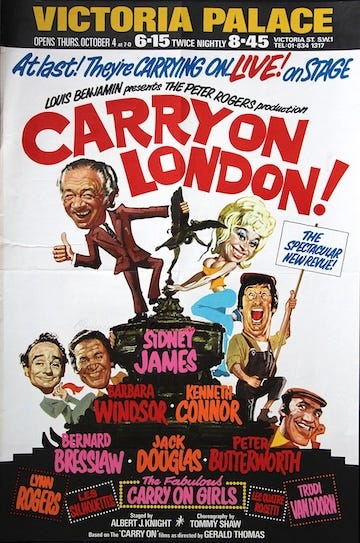
Although my expectations were initially confounded, the show feels very much in line with traditional screen-to-stage entertainments. I saw Carry On London at the Victoria Palace in the early 1970s (I was very young and am now quite old). It featured several of the film regulars led by Sid James – though significantly missing Kenneth Williams and Charles Hawtrey, Joan Sims and Hattie Jacques – and rather than creating a new stage comedy in the Carry On mould, it presented a sequence of songs, dances, and sketches, climaxing with a new variation on Carry On Cleo, “Cleopatra’s Boudoir.” Sid played a by-now aged Mark Antony (he was sixty when the show opened, Antony fifty-three when he died) opposite Barbara Windsor as a rather bustier Queen of the Nile than Amanda Barrie in the film.
From what I can discover, the 1975 stage version of Dad’s Army was similar. Featuring most of the TV cast (except John Laurie, who perhaps thought the enterprise doomed), it included a substantial section in which the cast impersonated wartime variety stars – Flanagan and Allen, Gert and Daisy, Max Miller and the Andrews Sisters. The model for these shows was the great variety bills of the 1940s, 50s and 60s, themselves descended from the old Music Hall tradition – Barbara Windsor led a Music Hall segment in Carry On London (apt, as she’d played Marie Lloyd three years earlier).
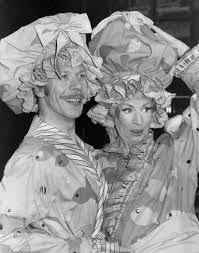
There’s also something of the Christmas pantomime about these shows, which are habitually advertised as featuring “celebrity legends.” They draw much of their energy from the television fame of their casts, and from the shows that first made those performers household names. I saw a Cinderella at the London Palladium, which featured three cast members from the popular sitcom Man About the House: Richard O’Sullivan as Buttons, and Yootha Joyce and Brian Murphy as the Ugly Sisters, Mildred and Georgina. Being cast in a role traditionally played by a man in grotesque drag cannot have done much for Yootha’s self-image.
A large part of the treat of such shows in the age of mass media is the chance to see stars of screen, radio and record “in the flesh,” live and in the same room as you. Anyone can say they’ve seen Sid James or Arthur Lowe on screen (who hasn’t?) but only a finite number can have seen them live – and in time, no one alive will have. There’s both a pleasure and a kind of kudos in seeing screen stars on stage. Yet stage shows built on the pull of “seeing the people off the telly doing what they do on the telly” are inevitably courting audiences who don’t usually or often go to the theatre (though managements will hope it gives them a taste for it). A straightforward stage version of Carry On or Dad’s Army might struggle to hold the shorter attention spans of those more used to the fast-cutting brevity of a 90 minute film or half-hour sitcom episodes. Hence the favouring of the variety format: it offered a familiar rhythm of sketches, songs and quick changes, perfectly suited to the sensibilities radio and television themselves had helped to create.
Given all this, what Steve Pemberton and Reece Shearsmith have done with their Inside No. 9 stage show is both traditional and canny: it draws on the old variety model while knowing full well that the title alone will lure in many who seldom set foot in a theatre. The crowd at the vast Oxford New Theatre looked very different from the ones I’ve seen at the Playhouse just around the corner. The play is made for them, yet constructed with enough theatrical gnosis and panache to win over more traditionalist audience members like me. And, of course, I can’t deny that I was myself won over to theatre by childhood visits to pantomimes and variety-type shows like Carry On London.
(Spoilers for the stage show follow.) Inside No. 9: Stage/Fright opens with a sketch depicting a badly behaved audience at a provincial tour of Hamlet. A spectator who actually wants to watch the play takes revenge on three noisy, inconsiderate pains in the arse. The scene viscerally enacts the usual polite notices not to talk, use phones, eat meals, or otherwise make a nuisance of oneself to one’s fellow theatregoers. It also slyly acknowledges that many in the real audience may not be familiar with theatre etiquette – which, in any case, has been deteriorating of late.
Next, Pemberton and Shearsmith appear as themselves, addressing the audience directly. They introduce the running plotline: that the theatre we’re sitting in was once the site of a terrible accident in which a Grand Guignol actress was accidentally killed on stage, and that her ghost Bloody Belle still haunts the venue. A series of old-fashioned but effective scare techniques – clever use of sound, lighting and timing – underline that we’re not watching a straightforward comedy show, but one with its fair share of shocks.
Intriguingly, one of the tour stops is the Empire Theatre in Sunderland, where Sid James suffered his fatal heart attack in 1976. His ghost is said to haunt the building, alongside those of Vesta Tilley and a stage manager who disappeared under mysterious circumstances. What a variety bill Sid and Vesta could make! Les Dawson famously refused to work the Empire. This ghoulish history must have lent Stage/Fright an added piquancy in Sunderland.
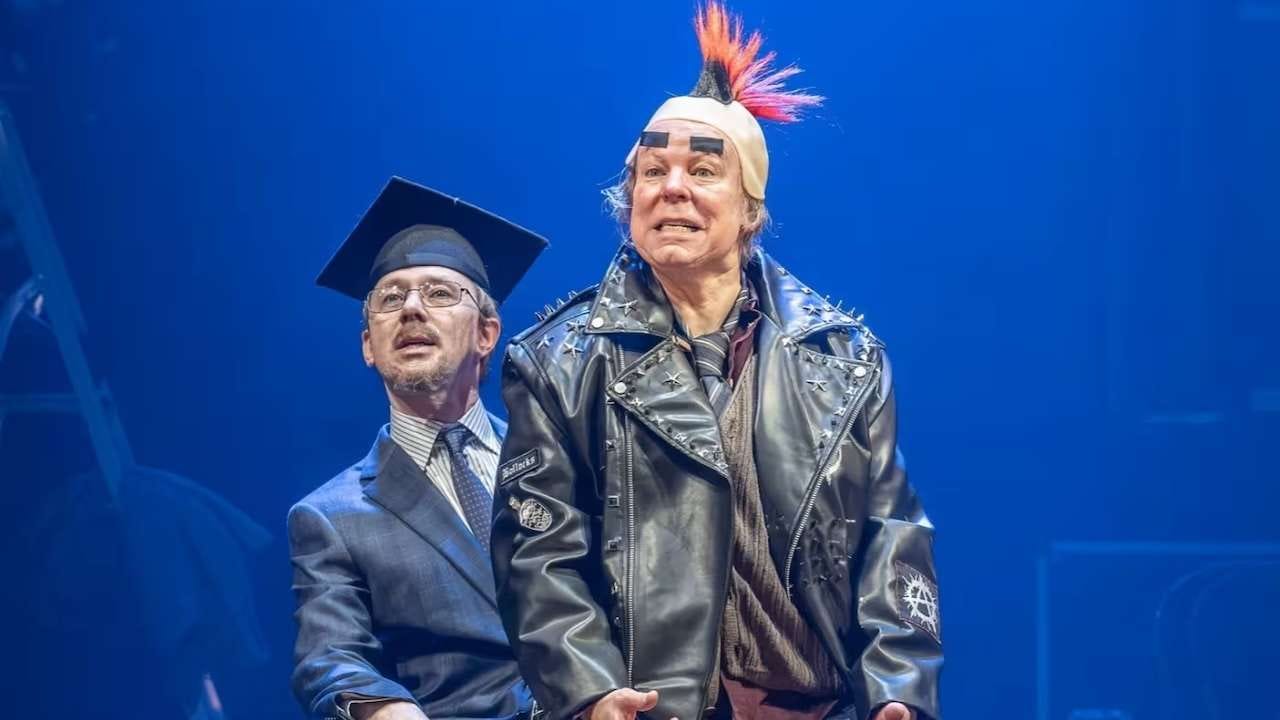
The meat of the first half is a re-enactment of the popular Inside No. 9 episode Bernie Clifton’s Dressing Room. It’s a perfect choice: a one-set piece about the reunion of a seedy old TV double act, complete with a recreation of Cheese and Crackers’ famous Brown Bottles routine. The acting in this stage version is, as befits the vast venues and Variety styling, much broader than on television. Pemberton and Shearsmith clearly understand that audiences will want to see them perform their “classic” routines.
When I saw Cannon and Ball in Blackpool in 2013 (the show itself, Ooh-la-la, a faithful relic of the seaside variety tradition), the highlight of the evening was their famous snooker routine. Perhaps significantly, the straight man in Cheese and Crackers is called Tommy, and it must have been a special night in Hull when Tommy Cannon himself appeared as the celebrity guest. Within Bernie Clifton’s Dressing Room, the duo have, as mentioned above, inserted a new skit about two bungling kidnappers who snatch the wrong victim – a part played each night by a different well-known name (some more well-known than others, judging by the list fans are compiling on Wikipedia). Cannon is perhaps the ideal guest for that role.
Unfortunately, our celebrity guest was Will Young. I can’t say I’m a fan. I once saw him as the Emcee in Cabaret; I was glad to see Eddie Redmayne in the role later. Whatever one thinks of his music, Young isn’t a natural actor. The improvised scenes with him felt a little awkward, and the timing was off. The segment recalls the celebrity spots on The Morecambe and Wise Christmas Show – Glenda Jackson, André Previn, Angela Rippon and the rest – but without quite the same sparkle. Between that disappointment and my lingering sense that this wasn’t the new play I’d expected, I felt ever-so-slightly deflated by the interval. Later, I was even more melancholy, reading they got Basil Brush in Woking (although I honestly thought he was dead - Boom! Boom!).
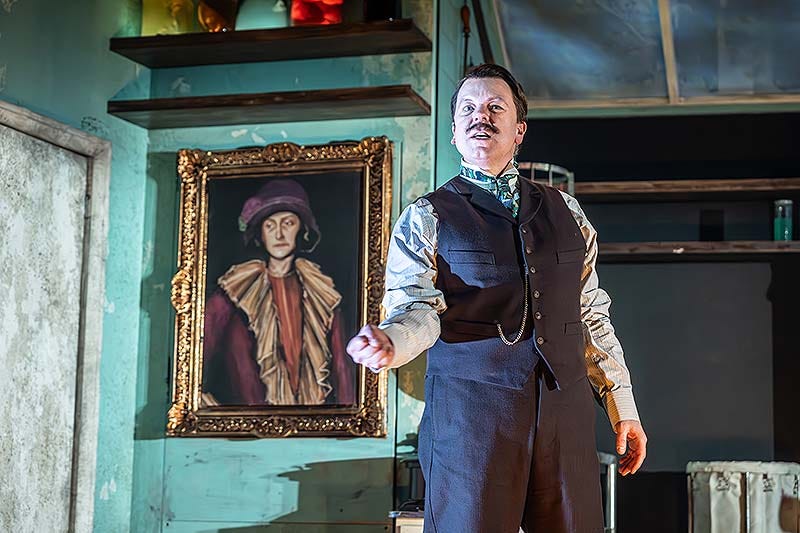
The second half more than made up for things. Here Pemberton and Shearsmith, joined by additional cast members, launch into the Grand Guignol La Terreur de l’Asile. Set in the titular asylum, it follows a hapless female patient seeking treatment for migraines who instead finds herself at the mercy of the murderous Dr Goudron – a name borrowed from a classic Guignol play first filmed in 1913. With its madhouse setting, this pastiche of a period thriller comes on like Orton’s What the Butler Saw crossed with a video nasty. Shearsmith, as a hypnotised patient, is made to saw off his own leg, while the head nurse’s eyeball dangles on its stem after hydrochloric acid is accidentally thrown in her face. We are then led to expect a bloody trepanning of the patient – when the first of the Babushka dolls is opened to reveal another inside.
For this is a company of contemporary actors rehearsing a revival of La Terreur de l’Asile. We are in a theatre haunted by the ghost that Pemberton and Shearsmith set up in the first half. There follows a more contemporary ghost story, mixing analogue stage effects with filmed excerpts. But the dolls have not stopped opening.
This second half makes for a knowing parade of metatheatricality and dramatic winks. Pemberton and Shearsmith love theatre like two enthused recent drama graduates, presenting their knowledge and brilliance at their first Edinburgh Fringe. They are indeed both graduates of a BA in Theatre Arts at Bretton Hall College of Education in West Yorkshire, and their work here still feels infused with that first flush of passion and craving to display knowledge of the subject.
The best of the Inside No. 9 series has always carried a humane sense of frailty and a vein of genuinely felt emotion; Bernie Clifton’s Dressing Room is a fine example. It feels a little coarsened by its transportation into this semi-variety setting. La Terreur de l’Asile has none of these qualities, though it makes up for their absence with sheer inventiveness.
By the end, I’d enjoyed the show. There’s a small, gnawing part of me that wonders whether Pemberton and Shearsmith are sometimes too inclined towards cleverness, rather than daring to strip away the layers of irony and knowingness that pervade their work. That may be unfair: after all, it’s their USP. So I’ll simply take my hat off to their voluminous knowledge of theatre lore and suppress the faint, nagging sense that they’re a little too tied to what will please the fans. The merchandise stall was prominent in the foyer. Everything in the show was exactly what the owners of the hands grasping for that merch would have hoped for.
Still, I can’t say it wasn’t nice to have a little variety in my usual theatrical diet.
Being able to watch the original 'Carry On' and 'Dad's Army' casts perform on stage sounds amazing! And it makes sense - there's a pantomime edge to all the Carry On films, and old skool sitcoms like 'Dad's Army' s often seem to mimic the intimate vibe of a stage/theatre.